Somewhere in Rotterdam, a shipping container full of avocados moves through a port terminal without a single human signing a document. The customs declaration, the temperature log, the transfer of ownership, and the payment all settle on their own. That scene isn't a pitch deck from 2019. It's the quiet reality of blockchain beyond cryptocurrency in 2026, and it's the part of the story most people still miss.
Key Takeaways
- Blockchain's real value shows up when multiple parties who don't trust each other need one shared record — not when one company just needs a database.
- Supply chain, healthcare records, and asset tokenization are the three areas where production deployments actually outnumber abandoned pilots.
- Most failures share one cause: a proof-of-concept built without a real business problem behind it.
- If a single trusted administrator can run your system, you probably don't need a blockchain at all.
- The interesting 2026 shift is tokenized real-world assets, not another memecoin.
- Regulation (GDPR, health data rules) is now the biggest design constraint, not the technology itself.
Blockchain beyond cryptocurrency: the real use cases that survived contact with reality
I've watched a lot of blockchain projects die. Not because the code failed — because nobody could answer a simple question: who actually needs this shared?
That question separates the projects still running in 2026 from the graveyard. The survivors all share one trait. They solve a coordination problem between organizations that don't fully trust each other.
When does a blockchain actually make sense?
Here's the test I use, and it's saved me from wasting months on bad ideas. Ask three things:
- Do several independent parties need to write to the same record?
- Is there no single party everyone trusts to hold the master copy?
- Does the record need to be tamper-evident after the fact?
If you answer no to any of these, use a normal database. Seriously. I once helped a team spec out a blockchain for an internal inventory system where one company controlled everything. It would have been slower, more expensive, and harder to query. We killed it and shipped Postgres in a week.
Blockchain isn't a faster database. It's a trust machine between strangers. The moment trust isn't the bottleneck, the whole thing becomes overhead. It's a clunky, slow, expensive way to store data that just happens to be impossible to quietly rewrite.
Why so many pilots never leave the lab
Walk through any industry conference and you'll hear about a supply chain pilot. What you won't hear is what happened to it eighteen months later.
The pattern is depressingly consistent. A company runs a proof of concept with three partners. Everyone nods. Then someone asks who pays for the ongoing infrastructure, and the room goes quiet. Or the partners realize they'd have to share commercially sensitive data they've spent decades keeping private. The pilot gets a nice case study and quietly shuts down.
Production deployments look different. They start with a painful, expensive, recurring problem — not a technology looking for a home.
Supply chain and logistics: where the record genuinely matters
A container of pharmaceuticals crosses four borders. At each one, someone re-enters the same data into a different system. A shipment of vaccines spoils because a temperature excursion goes unrecorded for six hours. Multiply that by thousands of shipments, and you're bleeding money on paperwork and spoilage that nobody can trace back to a source.
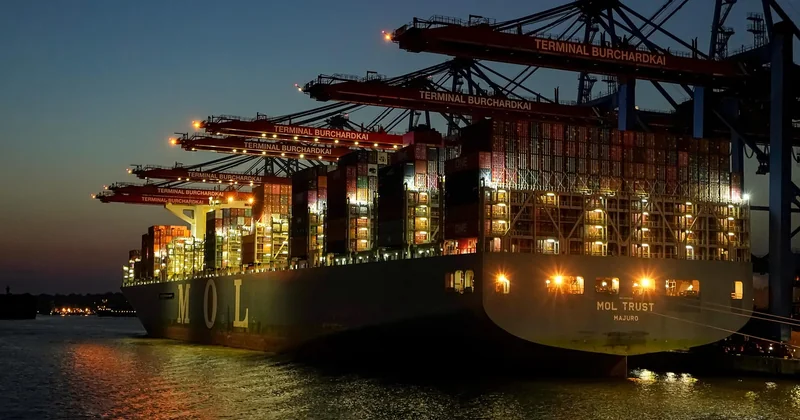
This is where shared ledgers earn their keep. When every party — the manufacturer, the freight forwarder, the customs broker, the retailer — writes to one tamper-evident log, disputes get resolved in minutes instead of weeks. You stop arguing about whose spreadsheet is right, because there's only one record.
What I got wrong the first time
An early project I worked on tried to put everything on-chain — every scan, every sensor reading, every invoice. Total disaster. The throughput couldn't keep up, storage costs ballooned, and nobody needed 90% of that data to be immutable. We ended up storing hashes of the important events on-chain and keeping bulk data off-chain. That worked. Lesson learned: put the fingerprint on-chain, not the whole file.
Cold chain tracking in practice
Temperature-sensitive goods are the clearest win. Sensors log conditions, those readings get hashed, and any party can verify a batch stayed within range. If a shipment spoils, you know exactly where and when the chain broke. Insurance claims that used to take months get settled with a verifiable trail.
The gain here isn't glamorous. It's fewer disputes, faster settlements, and food or medicine that doesn't rot in a warehouse while lawyers argue. That's the kind of boring value that actually survives.
Healthcare and identity: careful, this is where it gets hard
Health data is the use case everyone names and the one almost nobody gets right. The reason is simple, and it's not technical.

Patient records are legally protected. In Europe, GDPR's right to erasure collides head-on with an immutable ledger. You can't delete a record from a blockchain, which is precisely the property that makes it useful everywhere else. So the naive "put medical records on-chain" idea is dead on arrival. Anyone proposing it hasn't read the rules.
The workable approach
What works is consent and access management, not raw data storage. The blockchain records who was granted access to what, and when — a tamper-proof audit log. The actual medical data sits in encrypted, conventional storage, and the ledger tracks the keys and permissions.
A patient can see every time their file was opened, by which clinic, for what purpose. That transparency is genuinely new. Today, you have no idea who has looked at your records. Tomorrow, you could.
Decentralized identity, minus the hype
The same logic applies to identity documents. Instead of proving your age by handing over a passport that reveals your name, address, and birth date, you prove one fact: over eighteen, yes or no. The verifier learns nothing else.
Governments have been testing this quietly. It's slow, unglamorous work. But it points at something real: control over your own credentials, rather than handing a copy to every service that asks.
| Use case | What goes on-chain | What stays off-chain | Maturity in 2026 |
|---|---|---|---|
| Supply chain tracking | Event hashes, timestamps, transfers | Bulk sensor data, documents | Production at scale |
| Healthcare records | Access permissions, consent logs | Encrypted patient data | Limited pilots |
| Asset tokenization | Ownership, transfer rules | Legal paperwork, custody | Growing fast |
| Electronic voting | Anonymized cast ballots | Voter identity | Experimental |
| Internal company records | — | Everything | Shouldn't be on-chain |
Tokenized real-world assets: the quiet story of the decade
Forget NFTs of cartoon apes. The version that matters is boring and enormous: turning real assets — treasury bonds, real estate, invoices, commodities — into tokens that can move and settle instantly.
Why does this matter? Because settlement of traditional assets is absurdly slow. A bond trade can take two days to finalize. Money sits in limbo. Intermediaries take a cut at every step. Tokenization compresses that into something closer to instant, with a clear ownership record.
Why this time feels different
When I first looked at tokenization years ago, the infrastructure wasn't there. Custody was murky. The legal status of a token was anyone's guess.
That's changed. Major financial institutions now run tokenized funds on public and permissioned chains. The regulatory picture is still messy, but it's less messy than it was. The difference between a pilot and a product is usually that gap closing.
The catch is that this concentrates power rather than distributing it. The same banks tokenization was supposed to disrupt are the ones running tokenized products. Whether that's a feature or a bug depends on your politics.
The problems nobody puts on the slide
Interoperability is the big one. There are dozens of chains, and they don't talk to each other well. A supply chain record on one network can't easily be verified against a payment on another. Bridges between chains have been spectacular targets for theft. This isn't a solved problem, and anyone telling you it is hasn't tried to move assets across networks.
Then there's the energy question, which has mostly been answered — modern proof-of-stake networks use a tiny fraction of the power older designs burned — but the reputation damage lingers.
The cost comparison nobody wants to make
I keep coming back to this: for most companies, a well-run centralized database is cheaper, faster, and easier to maintain than any blockchain.
The ledger only wins when the alternative is reconciliation between organizations that don't trust each other. When your problem is "my three partners keep disagreeing about what happened," the shared record pays for itself. When your problem is "our internal system is slow," it doesn't.
Being honest about that boundary is what separates useful projects from expensive theater. I've seen both.
How to tell hype from substance
When someone pitches you a blockchain project, ask one question: what happens if we just use a shared database with a trusted operator?
If the answer is "nothing changes," walk away. If the answer is "no single party can be trusted with the master copy," you might have something real.
The use cases that survived into 2026 all pass that test. They're unglamorous. They involve freight, permissions, and settlement. They won't trend on social media.
But they're running right now, quietly moving avocados and bonds and patient consent forms through systems that finally stopped pretending cryptocurrency was the whole story. The technology found its place — just not the one the headlines promised. And honestly? That's a better ending than the one anyone was selling.